Showing posts with label foreign policy. Show all posts

Wednesday, October 12, 2011

Huntsman Calls for New Foreign Policy


110705_7.5RoginHuntsman117085436_Resized.jpg

Summary:
Jon M. Huntsman Jr., former governor of Utah and Republican candidate for the 2012 elections, has called for the creation of a modernized version of Foreign Policy.  Huntsman made a speech promoting the adoption of a new foreign policy at Southern New Hampshire University the day before the Republican presidential debate.  In his speech he addressed that as a nation we need “more economic engagement with the world” along with “agility” and “intelligence” as opposed to more ships, troops, and weapons that are not likely to make forward progress.  In his speech, Huntsman did not mention names of any Republican contenders but he seems to have been contrasting on Mitt Romney’s foreign policy address in which he delivered last week.  Huntsman calls for a transformation of the policy that will reflect the century we live in today and the new threats in which we are facing as of now.  He claimed that our foreign policy was created based on the “containment of communism” and that it should be modernized so that its basis is off of “expansion” and “engagement” in the world through trade agreements and partnerships.  President Obama has done quite the opposite of this in Huntsman’s words by diminishing “America’s presence on the global stage.”  Due to his former duties as ambassador to China in the Obama administration, Huntsman believes that we need to change our relationship with China from a “transactional” one to one that is infused with shared values rather than just the simple exchange of products and bonds.  Huntsman has struggled to reach the top of the Republican candidates but has seeked to distinguish himself starting with his promotion of credentials for a new foreign policy.


Analysis:
The Foreign Policy of the United States was made to set standards of interaction with foreign nations, Jon Huntsman seeks to remodel the standards within this policy in a way that will coincide better with the 21st century world.  In the current Republican campaign the domination of economic discussion has allowed us to view the different opinions on foreign policy and its adjustments.  Due to Jon Huntsman running for the position to be president of the United States, by the inherent powers that are given to national government, he has the potential to do what he wants with foreign policy for the most part.  I feel, opposed to Mitt Romney’s ideas of adjustments to foreign policy, Huntsman’s credentials and idea to modernize the policy could be a good thing for the U.S.  A change in the foreign policy by expansion of global engagement could benefit our country, its ideals, and its cry for the end of war.  

Article: http://thecaucus.blogs.nytimes.com/2011/10/10/huntsman-calls-for-new-foreign-policy/?pagemode=print


Monday, October 10, 2011

Foreign Policy not a big topic in G.O.P. race

The discussion of foreign policy has been in the background throughout the Republican campaigns in the 2012 elections. Many candidates have not discussed their plans for conducting foreign policy if they are elected. Domestic policy has taken over the entire campaign addressing the economy and jobs. Mitt Romney and John Huntsman have been the leaders in the discussion. Romney has been the first to conduct his address on the topic. Romney plans to strengthen the United States military and improve relationships with Israel, Britain and Mexico. Romney calls his plan “American Century”. He debated that Obama had weakened Americas image as a strong nation, and claims that he will create “the strongest nation on earth”. However, he did not include a plan on how he will deal with US occupation in Afghanistan. John Huntsman has not formally addressed his foreign policy plans, but he claims that compared to the other candidates he has the strongest foreign policy background. Huntsman was ambassador for china and can speak Mandarin. He believes that foreign policy should be a major discussion in the campaign given the world we are living in now. Most republicans want to eventually withdraw troops because we don’t have enough money to spend on war, and our money should be focused at home. No candidates have commented on the Arab Spring.


“If you do not want America to be the strongest nation on earth, I am not your president,” Mr. Romney said. “You have that president today.”


Throughout the Republican campaigns, certain topics have dominated including the economy, jobs and federalism. While these are important issues, discussions of foreign policy need to be more prevalent in the campaign. It has been agreed by all candidates that we are spending too much money on war, but that is what is mostly being talked about among the candidates. Huntsman stated that we need to focus more on foreign policy because of the world that we live in. We currently live in a world where our economies are interconnected throughout the globe. Globalization is specific to our time, and if our economy is such a huge issue, where do other countries come into play? If we don’t have enough jobs at home, who is discussing China or India’s major impact of our economy? American industry is suffering extremely due to globalization. Foreign Policy is becoming much less foreign in this day and age. Candidates should be focused on these issues in addition to the ongoing disputes on how to fix our receding economy and low job opportunities. Huntsman said that not many Americans have been listening on the topic of foreign policy. Lack of Americans interest may be the reason for its lack of discussion, but hopefully more candidates will join Romney and Huntsman in the discussion.


Read the original article here


CNN reports on Romney's Foreign Policy

Is China Cheating it's Way to the Top?

The United States government has been taking a closer look at Chinese subsidies and bankrolls (financial support/funding) recently. In a yearlong American inquiry, we filed complaints to the World Trade Organization (WTO) that the Chinese government’s subsidies go against free trade rules. As a member of the WTO, the Chinese government is expected to give a detailed report of subsidies given out at the national, state, and municipal level every two years. These reports allow other members of the WTO to make sure that no one is going against the rules of the organization, using government money to help companies buy share in other countries or to discourage imports. However, since China became a member of the WTO in 2001 they have filed one report in 2006 which only declared subsidies at the national level. Last year the Obama administration filed a complaint involving a subsidy in Beijing that jumped from $6.7 million to $22.5 million for each wind turbine manufacturer. Through this kind of support from the Chinese government China’s wind turbine and solar power industries have been able to become the world’s dominant producers within 5 years while American companies are sent crashing to the floors. The Senate is currently considering a bill that is challenging the Chinese government’s manipulation of it’s currency as a trade tool.


America used to be one of the worlds largest producers of goods. However in the past decade China has crept to the top of the list. How did they do so in such a short time? Under the Obama administration, the government has been looking at subsidies that the Chinese government allots to their major producers as well as their currency. “Persuasive and all-encompassing Chinese subsidies are decimating our industry”, said Ben Santarris from SolarWorld. Because the Chinese Juan is so low compared to the US dollar, it is almost always too expensive to produce in the United States and persuades us to go China for goods. The Senate is considering a bill that challenges China’s manipulation of its currency as a trade tool. The Chinese government has also been caught giving subsidies to major producers, particularly their wind turbine and solar power industries. These industries have become the top producers in clean energy in the past 5 years and put many of the United States’ clean energy companies out of business. Through the World Trade Organization and the bill from Senate the United States hopes to reclaim some of its world power from China.

Link to the Article >>

http://www.nytimes.com/2011/10/07/business/us-says-some-chinese-subsidies-violate-trade-rules.html?ref=china


Other Articles to Check Out...

http://www.nytimes.com/2009/08/25/business/energy-environment/25solar.html?ref=solarenergy
http://www.nytimes.com/2011/09/02/business/global/us-solar-company-bankruptcies-a-boon-for-china.html?ref=solarenergy

Tuesday, September 13, 2011

Iraqi's have second thoughts on declining numbers of U.S. troops

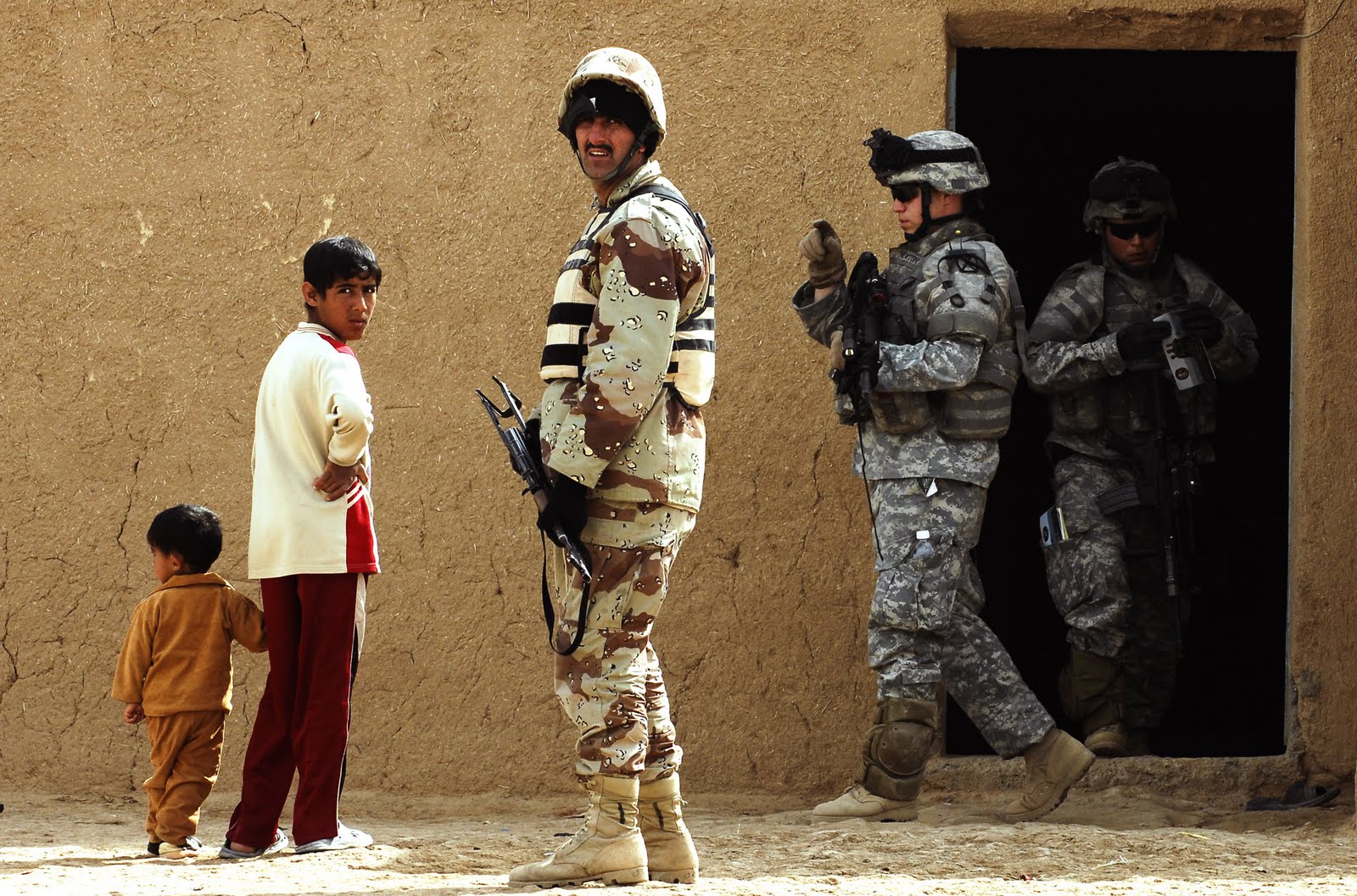
The country of Iraq has wanted their freedom from American occupation since they arrived in 2003. However,many begin to question the stability of the Iraqi government. The constant chaos through the nation suggest that without the American troops the country would resort back to its violent ways. Mohammed Qasim Abed, governor of Anbar Province in Iraq, stated "Iraq is just not ready, and it's necessary for the Americans to stay to prevent Iran from overrunning thecountry and helping to prevent violence. But we know 3,000 troops will not be enough". Iraqi's fear what will happen to the nation when the soldiers depart. Originally in 2003, Iraqi people wanted the US out, and saw them as occupying the nation killing innocent people. Throughout the US troops extended stay, that opinion has changed for many. Since most remember Hussains dictatorship, they can’t shy away from reality.Manyalso agree that the soldiers are the only standing and respected power that provides stability. The Shiites are feared by both the Sunni’sand the Kurds. A differing opinion suggests that the Americans are the ones who created the problems, and aren’t staying around to fix them.


Saddam Hussein US Soldiers


How will Iraq change when the number of US troops dramatically decreases? This is a question that nobody seems to know the answer to, but most have formed ideas. To some, fear, chaos, and violence come to mind. Others believe it will be for the good of the nation. However all can agree that the Iraqi government has failed in protecting its citizens and providing a stable economy. Their rough past and difficult beginning to independence suggest that violence is highly likely. The Sunni-Shiite conflict suggests internal violence, and the Iraqi-Iran conflict suggest external violence. Iraq is surrounded by many unstable countries filled with social, economic and governmental unrest. Terrorism is another huge problem in Iraq that potentially could cause internal and/or external conflict. The US troops have avoided extreme violence so far, but it the dynamics of Iraq will definitely change with the withdrawal of most US troops. The Iraq citizens want to avoid any of these extreme situations, but their faith in their own country is depleted. Those with this opinion believe that they the US government involvement in necessary until they would be abele to stably function on their own. Too many examples of a failed government are close to home for them, and don't want to become in any more danger than they already are in. For some Americans, the end of war since 9/11 is relieving, however remaining terrorist threats still creates fear throughout our own nation. A stable relationship with the country of Iraq could potentially provide comfort in either place, but that relationship could be a difficult one.


Original Article

China Dominates the Solar Industry as America's Companies Wither

The solar industry, once thought the future for America, has now turned into one of China's major money making businesses leaving the U.S. in the dust. China's solar industry sales have increased 30% in the last year, a shocking increase considering the economic downfall. The American solar companies Solyndra, Evergreen Solar and Spectra Watt have all filed for bankruptcy in the past year. They held 1/5 of the countries solar panel manufacturing capacity. While China's solar industry is flourishing, America's industry is doing the opposite. Most attribute China's success to free land from their government, small interest rates from state owned banks and huge economies of scale. As China continues to grow more powerful in the solar industry, will America take back what was their and redeem themeselves?

You can't compete with free money. As China's industry is benefiting, American solar industries are shrinking mainly because China's government gives out free or cheap land and low interest rates. The Chinese banks make most of their money from long term bonds. Those who fund the money for the bonds cannot take their money out until the term is up. So, the bank is able to give long term loads to big companies. China exports 95% of the solar panels it produces and buys its products in bulk which is cheaper in the long run. With an almost unlimited supply of money given to the industries by state banks, nothing is stopping China from becoming the number one produces of the world's solar panel industry in later years.